Short answer: the most important step in fluorine-free DWR development is to define success criteria before sampling, not to sample first and add tests later.
Key Takeaways
- Define target market and buyer RSL/MRSL.
- Confirm initial and post-wash spray requirements.
- Evaluate hand feel, shade change, breathability and bulk stability together.
Step 1: define the end use
Fluorine-free DWR for urban commuting, light outdoor, cycling, hiking or professional protection does not share one success standard. Define the scenario first, then decide spray rating, wash durability and whether waterproof-breathable construction is required.
Step 2: confirm base fabric and process
Fiber content, construction, weight, dyeing/finishing history and surface condition affect fluorine-free performance. Nylon, polyester, stretch fabric, high-density fabric and recycled materials need separate validation.
Process conditions should define pick-up, drying, curing, finishing sequence and compatibility with coating, lamination or calendering.
Step 3: build the testing loop
At minimum, record initial spray rating, post-wash spray rating, hand feel, shade change, air or moisture permeability, tear/stretch impact and buyer-specified chemical testing. Export projects should also keep auxiliary and supply-chain documents.
TTK Recommendation
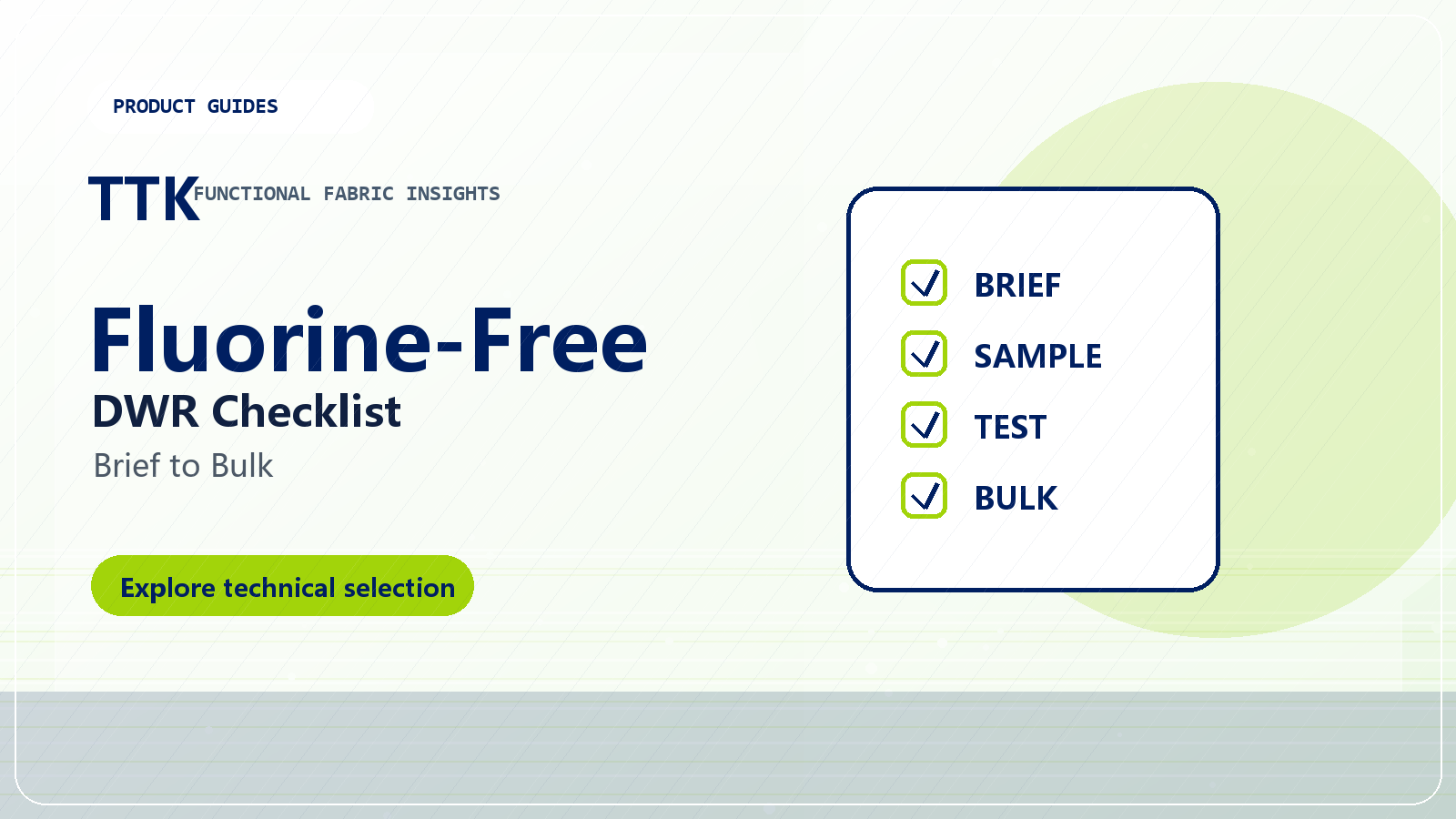
Fluorine-free DWR projects should use a workflow of brief, sample testing, retest confirmation and bulk process window.
FAQ
Is fluorine-free DWR less wash durable?
It varies by chemistry and process. Post-wash spray testing and parameter optimization are needed.
Can fluorine-free finishing affect shade?
It can, especially on dark or sensitive colors, so shade change and hand feel should be evaluated.
Next Step
TTK can help create a fluorine-free DWR development and testing checklist based on target market and end use.