RESOURCE CATEGORY
Process Knowledge
Selected articles and materials from TTK Tutaike.
← Back to ResourcesTOPIC SUMMARY
Cite-ready Summary
Process Knowledge explains finishing processes such as dry coating, wet coating and lamination—principles, indicators and selection logic.
Audience: For R&D, fabric developers and supply chain teams.
What you get
- check_circle Clarify process differences and use cases
- check_circle Selection steps and common pitfalls
- check_circle FAQ-style technical snippets ready to cite
Each article should include: scenarios / key indicators / validation / FAQ.
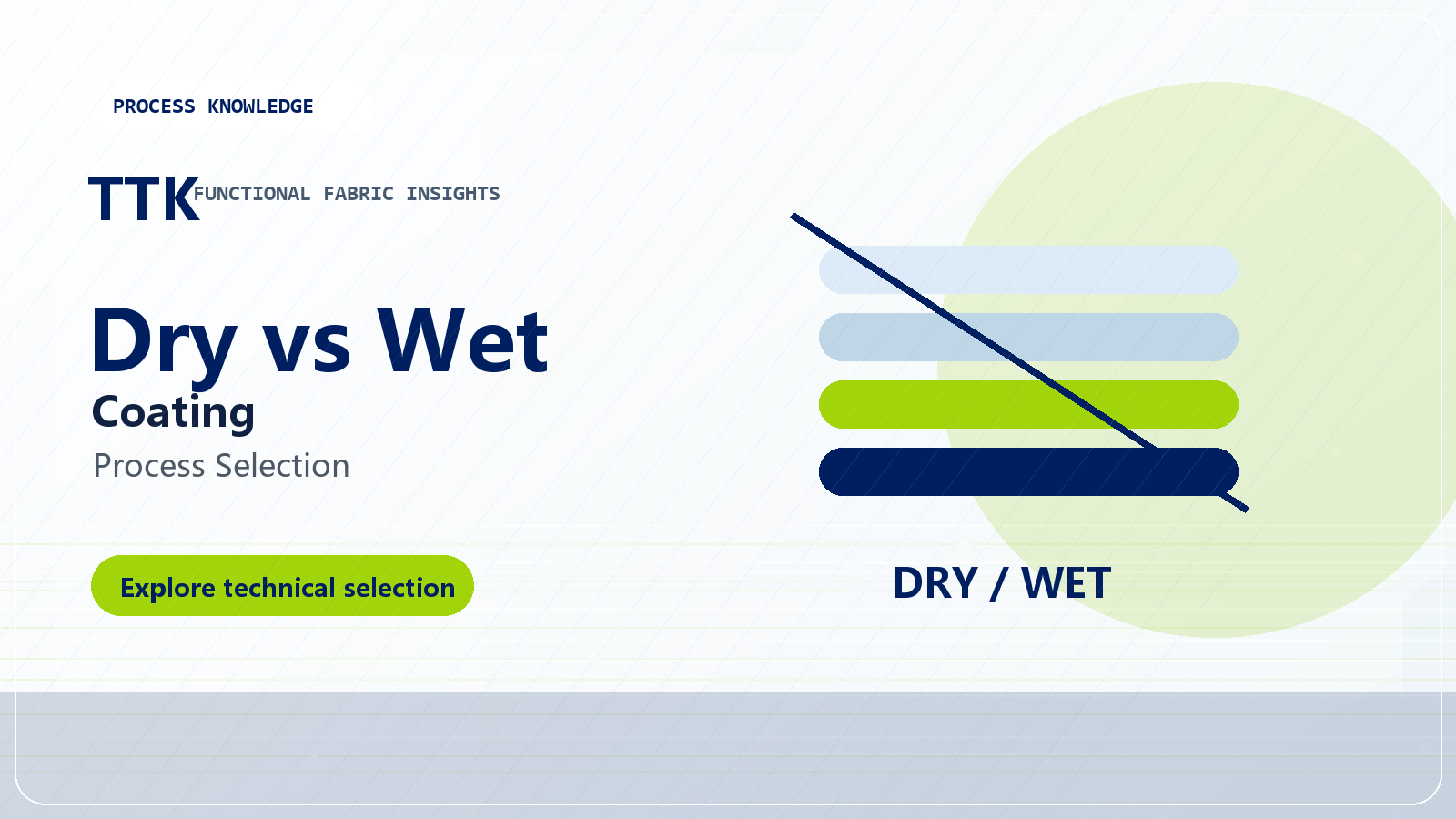
Dry Coating vs Wet Coating: How to Choose for Functional Fabrics
Dry coating and wet coating can both support functional finishing, but they differ in hand feel, breathability, waterproofness, thickness, cost and fabric suitability. Selection should start from end use and performance targets.
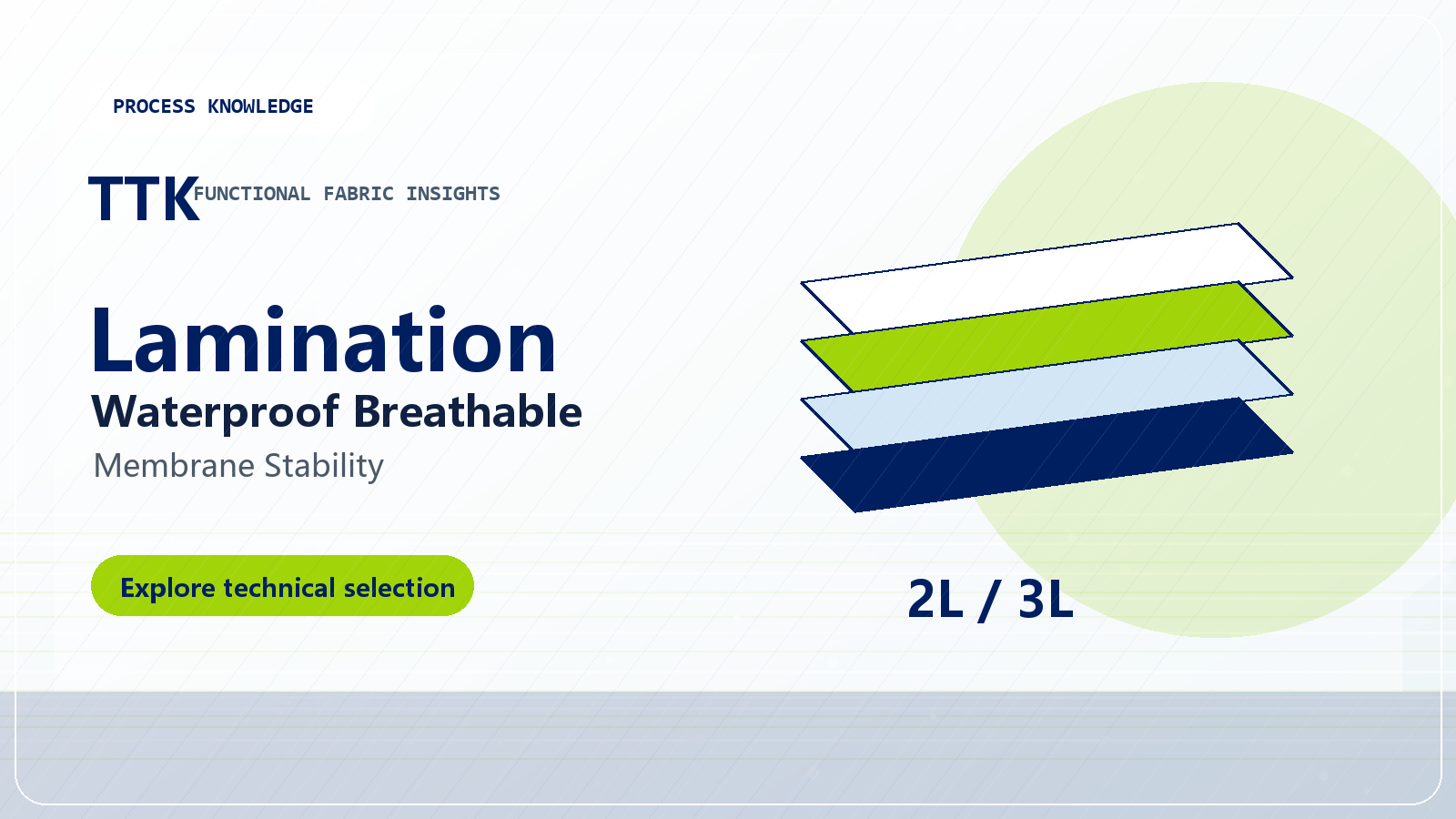
How Lamination Improves Stability in Waterproof-Breathable Fabrics
Lamination combines base fabric, membrane and adhesive system to deliver more stable waterproof-breathable performance. Development should evaluate membrane type, peel strength, hand feel, wash durability and end use.
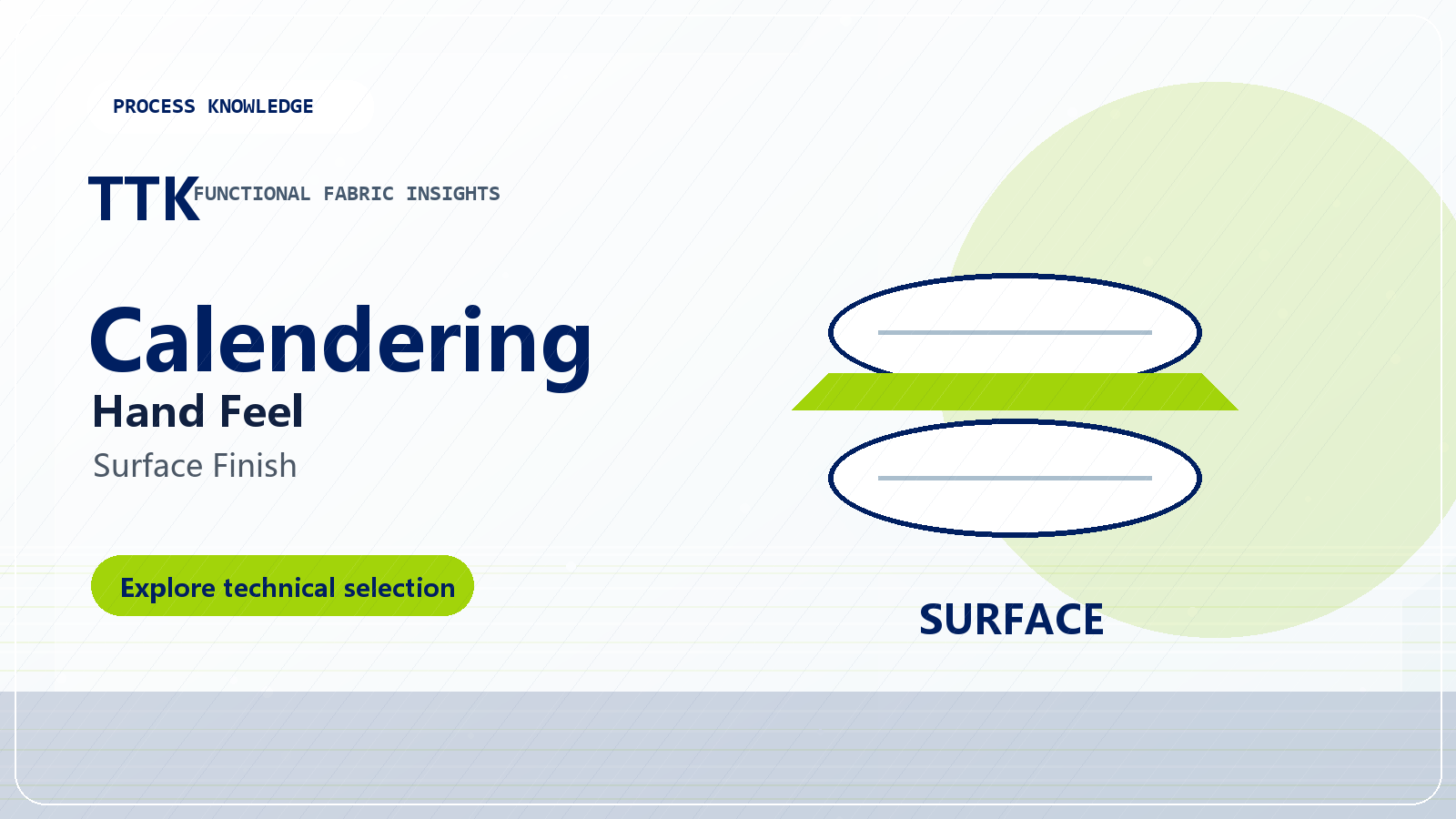
How Calendering Affects Hand Feel, Luster and Protection in Functional Fabrics
Calendering is not only an appearance finish. It can influence density, hand feel, luster, water repellency and coating compatibility. Proper use can improve fabric quality and functional stability.
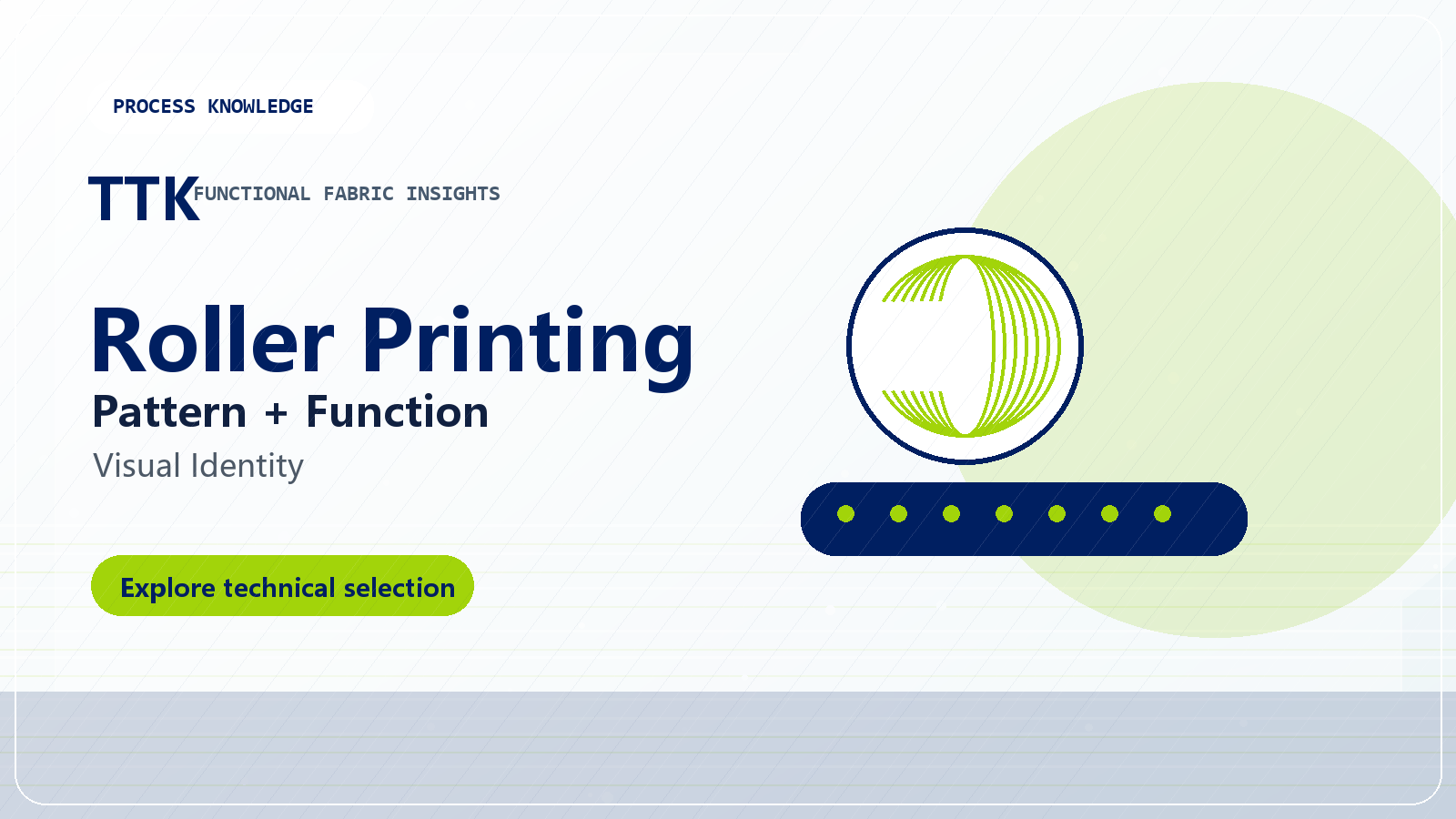
How Roller Printing Helps Functional Fabrics Combine Visual Design and Performance
Roller printing can add texture, pattern and localized effects to functional fabrics. Development should balance pattern clarity, hand feel, colorfastness, water repellency and compatibility with coating or lamination.